

Recycled Office Paper Guide
Why choose recycled paper for your office?
Recycled paper gives recovered fibre another useful life — but recycled content is only one part of making a sensible paper choice.
Modern recycled office papers are available for everyday printing, copying, correspondence and higher-quality business documents, with different levels of recycled content, whiteness, paper weight and certification.
The important question is not simply whether a sheet carries a recycled label, but whether its specification suits what you actually need to print.
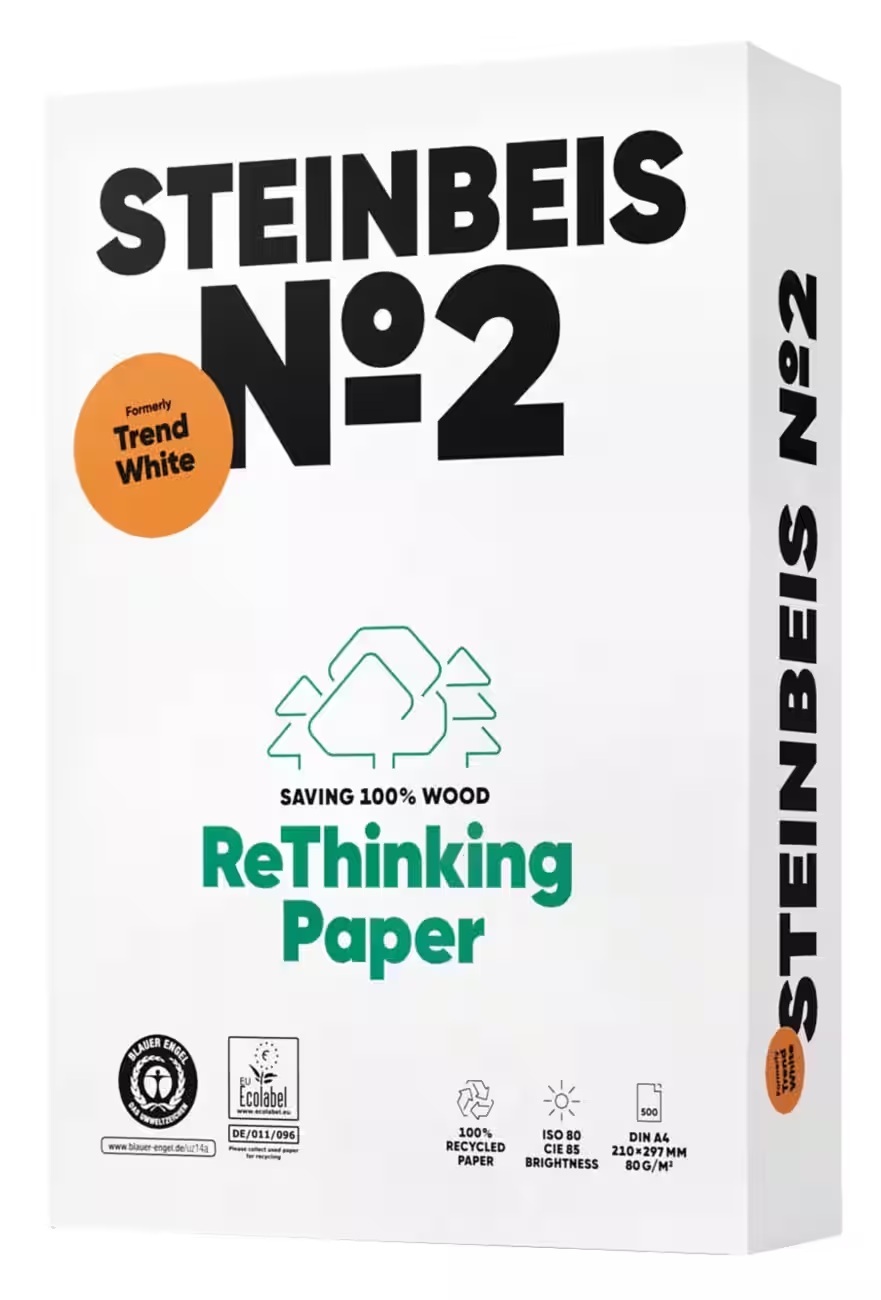
Start with the Specification
What does “recycled paper” actually mean?
Recycled paper is manufactured using recovered paper fibre rather than relying entirely on newly produced virgin fibre. The percentage and type of recycled content can vary significantly between products.
Some papers contain a proportion of recycled fibre, while others are manufactured entirely from recycled fibre. Products can also differ in the amount of post-consumer material used, their whiteness, bleaching process, surface treatment and environmental certifications.
That is why it is useful to read the actual product specification rather than assuming every recycled sheet has the same environmental profile or print characteristics.
Why Recycled Fibre Matters
Four practical reasons to consider recycled office paper
Recycled Paper Today
Recycled paper does not have to behave like an inferior substitute
Recycled office paper is now available in specifications intended for routine laser, inkjet and copier use, including products made entirely from recovered fibre.
Some grades deliberately retain a lower-white or more natural appearance, while others are designed to provide a brighter sheet. That difference is not automatically a measure of print quality — it is simply another specification to consider.
For everyday internal correspondence and general office printing, a lower-whiteness recycled sheet may perform perfectly well without requiring the appearance of a premium presentation paper.

A Useful Example
Xerox Recycled Pure shows why the product specification matters
Xerox Recycled Pure is an 80gsm everyday office paper manufactured from 100% recycled fibre. Supplier technical information states that it is de-inked without bleaching and does not use optical brightening agents.
That tells a buyer considerably more than simply calling the sheet “eco paper”: we know the fibre content, paper weight, treatment and intended application, which makes it easier to judge whether the product suits the requirement.
Recycled Content vs Certification
Recycled paper and FSC-certified paper answer different questions
Recycled-content information tells you about material that has been recovered and used again. Forest certification such as FSC® relates to requirements around forest management and chain of custody within that certification system.
They are therefore not direct alternatives. A product may contain recycled fibre, certified fibre or a combination of both depending on its specification.
Do Not Forget Paper Weight
A recycled sheet still needs to be appropriate for the job
Choosing recycled content does not remove the need to think about grammage. Using a substantially heavier sheet than the document requires increases the amount of paper material consumed.
Reduce First. Then Choose Better.
The first question should still be: does this need to be printed?
Recycled paper can be a sensible material choice, but avoiding an unnecessary print job generally reduces material use more directly than changing the type of paper being purchased.
Digital workflows, duplex printing, appropriate paper weights and limiting premium paper to documents that genuinely require it can all form part of a more considered paper policy.
Practical Buying Guide
How to choose recycled paper for your workplace
Explore Office Paper
Compare recycled paper with our wider paper guides
Recycled Paper FAQs
Common questions about recycled office paper
Is recycled paper suitable for everyday office printers?
Many recycled office papers are specifically produced for copiers, laser printers and inkjet printers. Always check the individual product specification to confirm compatibility.
Is 100% recycled paper better than paper with a lower recycled percentage?
It contains more recovered fibre, but recycled percentage alone does not tell you everything about the product. Paper weight, manufacturing information, sourcing, performance and intended use are also relevant.
Does recycled paper look grey?
It varies. Some recycled papers deliberately have a lower-white or natural shade, while other recycled grades are much brighter. Check the whiteness and product images where appearance is important.
What is post-consumer recycled paper?
Post-consumer fibre comes from paper products that have already been used by consumers or organisations and then recovered for recycling.
Is FSC-certified paper the same as recycled paper?
No. Recycled content describes the material used in the paper, while FSC certification relates to forest-management and chain-of-custody requirements within the FSC system. Some papers may carry both recycled-content information and certification.
What is the best recycled paper for an office?
There is no single best recycled paper for every workplace. Start with the intended use, then compare recycled content, grammage, printer compatibility, whiteness, relevant certification and price.
Choose Paper More Carefully
Reduce unnecessary printing first, then choose the paper that genuinely fits the job
Browse recycled and everyday office papers or explore our wider paper guide if you need help comparing recycled content, paper weight and sourcing credentials.
Featured Blog Posts
Latest Blog Posts
.jpg)

.jpg "Green Office Free Delivery")


Recycled Office Paper Guide
Why choose recycled paper for your office?
Recycled paper gives recovered fibre another useful life — but recycled content is only one part of making a sensible paper choice.
Modern recycled office papers are available for everyday printing, copying, correspondence and higher-quality business documents, with different levels of recycled content, whiteness, paper weight and certification.
The important question is not simply whether a sheet carries a recycled label, but whether its specification suits what you actually need to print.
Start with the Specification
What does “recycled paper” actually mean?
Recycled paper is manufactured using recovered paper fibre rather than relying entirely on newly produced virgin fibre. The percentage and type of recycled content can vary significantly between products.
Some papers contain a proportion of recycled fibre, while others are manufactured entirely from recycled fibre. Products can also differ in the amount of post-consumer material used, their whiteness, bleaching process, surface treatment and environmental certifications.
That is why it is useful to read the actual product specification rather than assuming every recycled sheet has the same environmental profile or print characteristics.
Why Recycled Fibre Matters
Four practical reasons to consider recycled office paper
Recycled Paper Today
Recycled paper does not have to behave like an inferior substitute
Recycled office paper is now available in specifications intended for routine laser, inkjet and copier use, including products made entirely from recovered fibre.
Some grades deliberately retain a lower-white or more natural appearance, while others are designed to provide a brighter sheet. That difference is not automatically a measure of print quality — it is simply another specification to consider.
For everyday internal correspondence and general office printing, a lower-whiteness recycled sheet may perform perfectly well without requiring the appearance of a premium presentation paper.
A Useful Example
Xerox Recycled Pure shows why the product specification matters
Xerox Recycled Pure is an 80gsm everyday office paper manufactured from 100% recycled fibre. Supplier technical information states that it is de-inked without bleaching and does not use optical brightening agents.
That tells a buyer considerably more than simply calling the sheet “eco paper”: we know the fibre content, paper weight, treatment and intended application, which makes it easier to judge whether the product suits the requirement.
Recycled Content vs Certification
Recycled paper and FSC-certified paper answer different questions
Recycled-content information tells you about material that has been recovered and used again. Forest certification such as FSC® relates to requirements around forest management and chain of custody within that certification system.
They are therefore not direct alternatives. A product may contain recycled fibre, certified fibre or a combination of both depending on its specification.
Do Not Forget Paper Weight
A recycled sheet still needs to be appropriate for the job
Choosing recycled content does not remove the need to think about grammage. Using a substantially heavier sheet than the document requires increases the amount of paper material consumed.
Reduce First. Then Choose Better.
The first question should still be: does this need to be printed?
Recycled paper can be a sensible material choice, but avoiding an unnecessary print job generally reduces material use more directly than changing the type of paper being purchased.
Digital workflows, duplex printing, appropriate paper weights and limiting premium paper to documents that genuinely require it can all form part of a more considered paper policy.
Practical Buying Guide
How to choose recycled paper for your workplace
Explore Office Paper
Compare recycled paper with our wider paper guides
Recycled Paper FAQs
Common questions about recycled office paper
Is recycled paper suitable for everyday office printers?
Many recycled office papers are specifically produced for copiers, laser printers and inkjet printers. Always check the individual product specification to confirm compatibility.
Is 100% recycled paper better than paper with a lower recycled percentage?
It contains more recovered fibre, but recycled percentage alone does not tell you everything about the product. Paper weight, manufacturing information, sourcing, performance and intended use are also relevant.
Does recycled paper look grey?
It varies. Some recycled papers deliberately have a lower-white or natural shade, while other recycled grades are much brighter. Check the whiteness and product images where appearance is important.
What is post-consumer recycled paper?
Post-consumer fibre comes from paper products that have already been used by consumers or organisations and then recovered for recycling.
Is FSC-certified paper the same as recycled paper?
No. Recycled content describes the material used in the paper, while FSC certification relates to forest-management and chain-of-custody requirements within the FSC system. Some papers may carry both recycled-content information and certification.
What is the best recycled paper for an office?
There is no single best recycled paper for every workplace. Start with the intended use, then compare recycled content, grammage, printer compatibility, whiteness, relevant certification and price.
Choose Paper More Carefully
Reduce unnecessary printing first, then choose the paper that genuinely fits the job
Browse recycled and everyday office papers or explore our wider paper guide if you need help comparing recycled content, paper weight and sourcing credentials.
