
Sustainable Mailing Guide
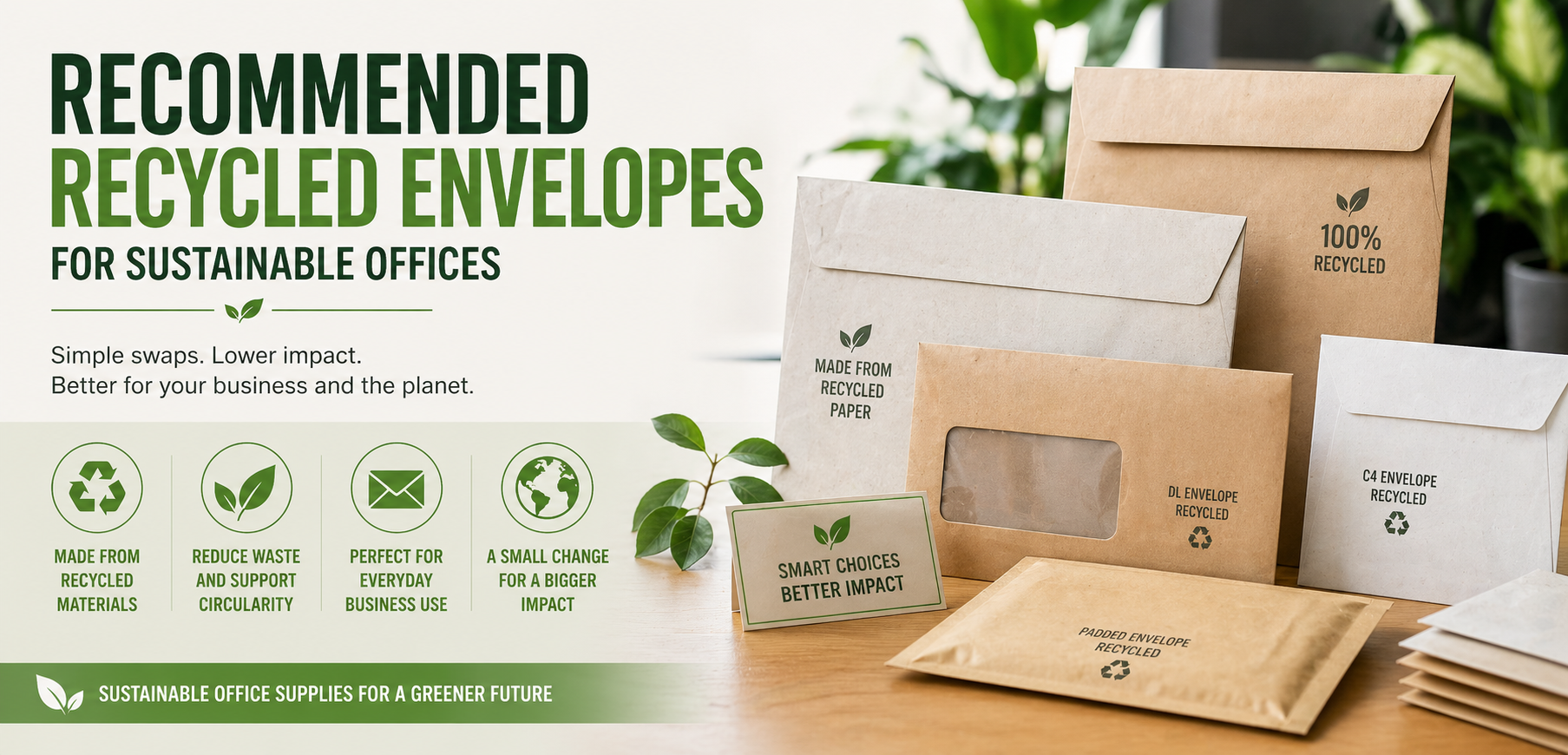
Recommended Recycled Envelopes for Sustainable Offices
Envelopes are an everyday office essential, which makes them a practical category to review when your organisation is looking to improve workplace procurement.
From routine letters and invoices to protected documents, internal mail and parcel dispatch, this guide explains the main envelope types to consider and how to choose the right format for the job.
Better Everyday Procurement
Why choose recycled envelopes?
Recycled-paper envelopes can help keep recovered fibres in circulation and reduce reliance on newly produced fibre for everyday mailing.
The key is to choose an envelope that is suitable for the task first, then compare recycled-content, recyclable and responsibly sourced alternatives where available.
1. Everyday Mail
Plain envelopes for letters and general correspondence
Plain envelopes are one of the most versatile choices for normal workplace mail. They are suitable for letters, invoices, statements, forms and general business correspondence.
If your address is printed separately or written onto the envelope, a plain format can also avoid the additional window material used in window envelopes.

2. Accounts & Statements
Window envelopes for invoices and statements
Window envelopes are useful where the recipient address is already printed on the document inside. This can save time for finance teams, payroll departments and organisations sending regular outbound mail.
When comparing products, check envelope size, window position and whether the format matches the way your documents are folded.
3. Reusable Internal Mail
Internal envelopes for interoffice documents
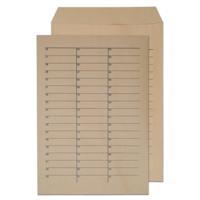
Internal envelopes are designed for moving documents around an organisation rather than sending them through the external postal system.
Because they can be reused for multiple recipients, they can be a practical way to avoid using a fresh envelope every time paperwork moves between departments, offices or sites.
4. Document Protection
Board-backed envelopes for documents that should not bend
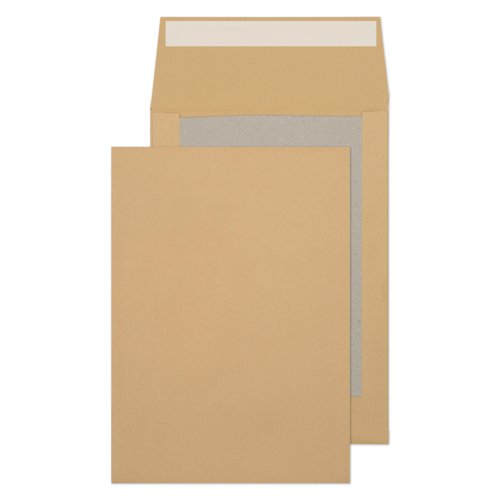
Board-backed envelopes are useful for certificates, photographs, reports and other documents that need more rigidity during transit.
The reinforced backing helps reduce the risk of contents becoming creased or folded, making this a more suitable format than a standard envelope for sensitive paperwork.
5. Protected Mail
Padded envelopes for small items and protected documents

When the contents need cushioning as well as an outer envelope, padded bags can provide additional protection during handling and delivery.
They can be useful for small products, accessories, samples and documents that could otherwise be damaged in transit. Where sustainability is a priority, compare the construction and material information for individual products rather than assuming every padded envelope has the same end-of-life route.
6. Parcel Mailing
Polythene envelopes and mailing bags
Polythene mailing bags are widely used for lightweight goods and parcel dispatch because they are flexible and take up little storage space.
They are not automatically the most sustainable option for every shipment, so compare them with paper-based mailers, boxes and reusable packaging according to the item being sent and the protection required.

7. Confidential Mail
High-security and tamper-evident envelopes
Standard recycled paper envelopes will not be suitable for every mailing task. Where confidentiality, tamper evidence or controlled handling is important, a specialist security envelope may be required.
8. High-Volume Mailing
Machine envelopes for automated mailing
Organisations processing high volumes of invoices, statements or customer correspondence may use inserting or mailing equipment rather than packing envelopes manually.
Machine envelopes are designed to work with compatible mailing systems, so dimensions, window position, closure and equipment compatibility are especially important.
9. Payroll & Small Documents
Wage envelopes for payslips and small documents
Wage envelopes are a specialist format for payroll documents, cash handling and other small paperwork where a full-size business envelope is unnecessary.
Buying Guide
Choosing the right envelope size
Choosing the correct envelope size avoids unnecessary material and gives documents a more professional fit.
| Envelope Size | Typical Use |
|---|---|
| DL | A4 letters folded into thirds; common for invoices, statements and correspondence. |
| C5 | A4 folded once or A5 documents. |
| C4 | A4 documents sent flat without folding. |
| Larger / Specialist | Reports, booklets, catalogues and other oversized contents. |
Seal Types
Self-seal, peel-and-seal or gummed?
Sustainability Checklist
What should you look for in a more sustainable envelope?
- Recycled content: check how much recycled fibre the envelope contains.
- Responsible sourcing: look for relevant paper certifications where available.
- Right size: avoid using more material than the contents need.
- Reusability: internal envelopes and some mailing formats can be used more than once.
- Material mix: consider whether windows, padding or plastic components affect local recycling options.
- Performance: the envelope still needs to protect the contents properly.
Quick Comparison
Which envelope type should you choose?
| Need | Envelope Type |
|---|---|
| General letters and correspondence | Plain envelope |
| Invoices with address printed on the document | Window envelope |
| Documents moving between departments | Internal envelope |
| Documents that must stay flat | Board-backed envelope |
| Small items needing cushioning | Padded envelope |
| Lightweight parcel dispatch | Mailing bag / polythene envelope |
| Confidential or tamper-sensitive contents | High-security envelope |
Keep Reading
Related sustainable workplace guides
Final Thoughts
Choose the envelope that protects the contents without over-specifying the job
Recycled envelopes can be a straightforward improvement for routine workplace mail, but there is no single envelope type that is right for every task.
Use simple paper envelopes for everyday correspondence, reusable internal envelopes where appropriate, and specialist protective or security products only when the contents genuinely require them.
Find the right envelopes for your workplace
Compare everyday, recycled, internal, protective and specialist mailing envelopes for business use.
Featured Blog Posts
Latest Blog Posts
.jpg)

.jpg "Green Office Free Delivery")


Sustainable Mailing Guide
Recommended Recycled Envelopes for Sustainable Offices
Envelopes are an everyday office essential, which makes them a practical category to review when your organisation is looking to improve workplace procurement.
From routine letters and invoices to protected documents, internal mail and parcel dispatch, this guide explains the main envelope types to consider and how to choose the right format for the job.
Better Everyday Procurement
Why choose recycled envelopes?
Recycled-paper envelopes can help keep recovered fibres in circulation and reduce reliance on newly produced fibre for everyday mailing.
The key is to choose an envelope that is suitable for the task first, then compare recycled-content, recyclable and responsibly sourced alternatives where available.
1. Everyday Mail
Plain envelopes for letters and general correspondence
Plain envelopes are one of the most versatile choices for normal workplace mail. They are suitable for letters, invoices, statements, forms and general business correspondence.
If your address is printed separately or written onto the envelope, a plain format can also avoid the additional window material used in window envelopes.
2. Accounts & Statements
Window envelopes for invoices and statements
Window envelopes are useful where the recipient address is already printed on the document inside. This can save time for finance teams, payroll departments and organisations sending regular outbound mail.
When comparing products, check envelope size, window position and whether the format matches the way your documents are folded.
3. Reusable Internal Mail
Internal envelopes for interoffice documents
Internal envelopes are designed for moving documents around an organisation rather than sending them through the external postal system.
Because they can be reused for multiple recipients, they can be a practical way to avoid using a fresh envelope every time paperwork moves between departments, offices or sites.
4. Document Protection
Board-backed envelopes for documents that should not bend
Board-backed envelopes are useful for certificates, photographs, reports and other documents that need more rigidity during transit.
The reinforced backing helps reduce the risk of contents becoming creased or folded, making this a more suitable format than a standard envelope for sensitive paperwork.
5. Protected Mail
Padded envelopes for small items and protected documents
When the contents need cushioning as well as an outer envelope, padded bags can provide additional protection during handling and delivery.
They can be useful for small products, accessories, samples and documents that could otherwise be damaged in transit. Where sustainability is a priority, compare the construction and material information for individual products rather than assuming every padded envelope has the same end-of-life route.
6. Parcel Mailing
Polythene envelopes and mailing bags
Polythene mailing bags are widely used for lightweight goods and parcel dispatch because they are flexible and take up little storage space.
They are not automatically the most sustainable option for every shipment, so compare them with paper-based mailers, boxes and reusable packaging according to the item being sent and the protection required.
7. Confidential Mail
High-security and tamper-evident envelopes
Standard recycled paper envelopes will not be suitable for every mailing task. Where confidentiality, tamper evidence or controlled handling is important, a specialist security envelope may be required.
8. High-Volume Mailing
Machine envelopes for automated mailing
Organisations processing high volumes of invoices, statements or customer correspondence may use inserting or mailing equipment rather than packing envelopes manually.
Machine envelopes are designed to work with compatible mailing systems, so dimensions, window position, closure and equipment compatibility are especially important.
9. Payroll & Small Documents
Wage envelopes for payslips and small documents
Wage envelopes are a specialist format for payroll documents, cash handling and other small paperwork where a full-size business envelope is unnecessary.
Buying Guide
Choosing the right envelope size
Choosing the correct envelope size avoids unnecessary material and gives documents a more professional fit.
| Envelope Size | Typical Use |
|---|---|
| DL | A4 letters folded into thirds; common for invoices, statements and correspondence. |
| C5 | A4 folded once or A5 documents. |
| C4 | A4 documents sent flat without folding. |
| Larger / Specialist | Reports, booklets, catalogues and other oversized contents. |
Seal Types
Self-seal, peel-and-seal or gummed?
Sustainability Checklist
What should you look for in a more sustainable envelope?
- Recycled content: check how much recycled fibre the envelope contains.
- Responsible sourcing: look for relevant paper certifications where available.
- Right size: avoid using more material than the contents need.
- Reusability: internal envelopes and some mailing formats can be used more than once.
- Material mix: consider whether windows, padding or plastic components affect local recycling options.
- Performance: the envelope still needs to protect the contents properly.
Quick Comparison
Which envelope type should you choose?
| Need | Envelope Type |
|---|---|
| General letters and correspondence | Plain envelope |
| Invoices with address printed on the document | Window envelope |
| Documents moving between departments | Internal envelope |
| Documents that must stay flat | Board-backed envelope |
| Small items needing cushioning | Padded envelope |
| Lightweight parcel dispatch | Mailing bag / polythene envelope |
| Confidential or tamper-sensitive contents | High-security envelope |
Keep Reading
Related sustainable workplace guides
Final Thoughts
Choose the envelope that protects the contents without over-specifying the job
Recycled envelopes can be a straightforward improvement for routine workplace mail, but there is no single envelope type that is right for every task.
Use simple paper envelopes for everyday correspondence, reusable internal envelopes where appropriate, and specialist protective or security products only when the contents genuinely require them.
Find the right envelopes for your workplace
Compare everyday, recycled, internal, protective and specialist mailing envelopes for business use.
