

Sustainable Procurement Guide
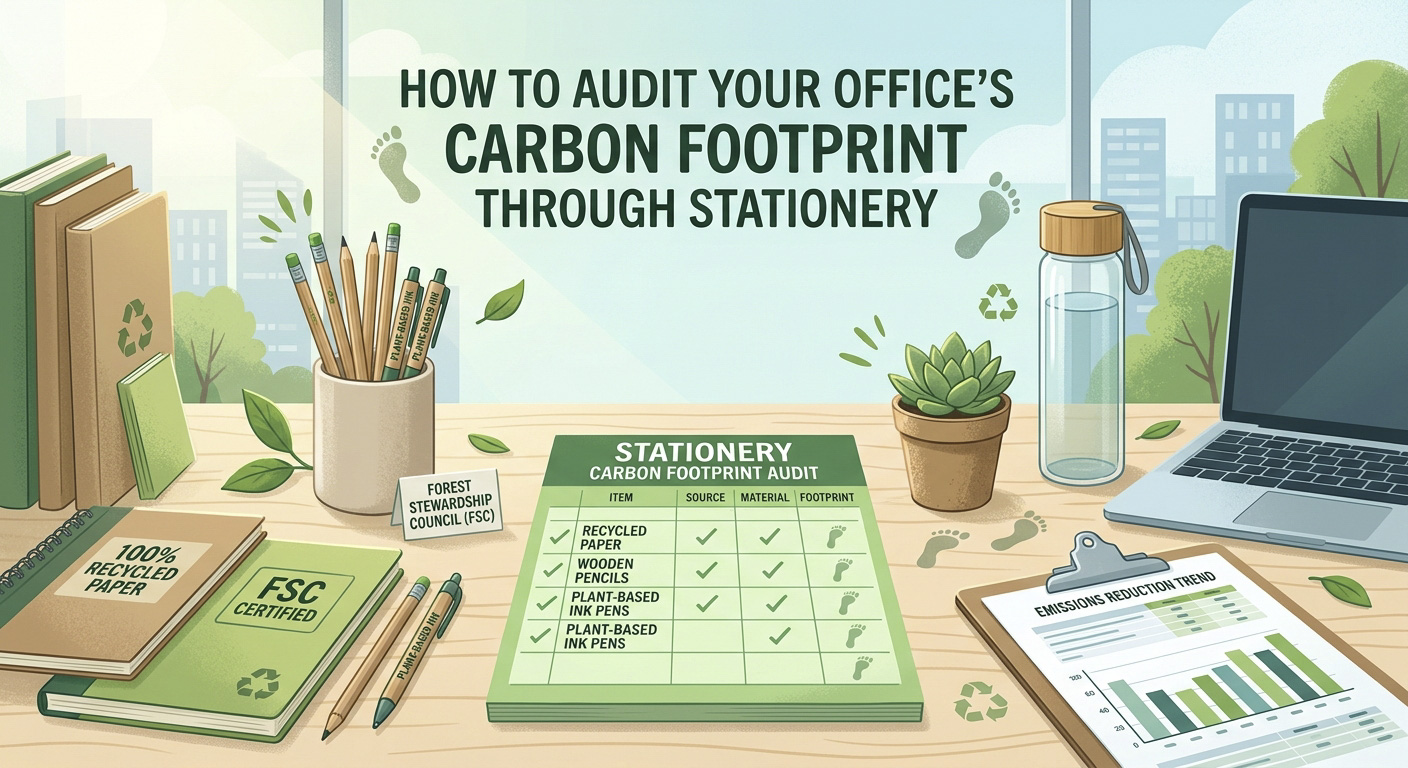
How to Audit Your Office's Carbon Footprint Through Stationery
Stationery is one of the easiest places to start measuring and reducing your workplace impact. It is bought often, used everywhere and made from materials you can actually see, which makes it ideal for a first sustainable procurement audit.
This guide walks through a simple, practical six-step process to understand what your office buys, spot the biggest impacts and make smarter swaps without disrupting how your team works.
Why start with stationery?
Most of an office's carbon footprint sits in areas like energy, travel and purchased goods. Stationery falls under purchased goods, often reported as part of Scope 3 emissions. It is rarely the largest slice, but it is one of the most controllable.
Stationery is also a visible, low-risk way to build good habits. The same process you use here (list, measure, compare, switch, review) can later be applied to IT equipment, cleaning products, packaging and furniture.
Frequent purchases
Paper, pens and notebooks are reordered all year, so small improvements are repeated many times over.
Clear material choices
Recycled content, FSC certification and plastic-free packaging are easy to compare on product pages.
Easy team buy-in
Everyone uses stationery, so swaps are quick to explain and easy for staff to notice.
Step 1: Build your stationery inventory
Start by listing everything your organisation buys regularly. Pull the last 12 months of orders from your purchasing system or supplier account, then walk the stationery cupboard, print room and desks to catch anything bought outside the main process.
For each product, record:
- Product name, supplier and pack size
- Quantity bought per year and annual spend
- Main material (paper, plastic, metal, card)
- Whether it contains recycled content or carries a certification
A simple spreadsheet is all you need. Accuracy matters less at this stage than completeness.

Step 2: Start with paper
Paper is usually the highest-volume item on the list, so it is the best place to look first. Check how many reams you use, whether the paper is recycled or FSC certified, and how much printing is genuinely necessary. Our guide to why choose recycled paper explains what to look for.
Switching to recycled paper and setting printers to double-sided by default are two of the simplest changes with the biggest visible effect. For a wider plan, see how to build a sustainable office printing strategy.
Step 3: Categorise by material and impact
Group your inventory so the hotspots become obvious. A simple traffic-light system works well:
- Green: recycled or certified products, plastic-free packaging, long-lasting items.
- Amber: standard products with some credentials, or items that could be replaced with a better option.
- Red: single-use plastics, virgin-material items bought in high volumes, and anything over-packaged.
Focus first on red items bought most often. Replacing a high-volume red item will almost always matter more than perfecting a rarely used green one.


Step 5: Look beyond the product
A product's footprint is not only about what it is made from. When comparing options, also consider:
- Durability: does it last longer, or can it be refilled or reused?
- Packaging: is it plastic-free, and is it recyclable where you are?
- Delivery: can orders be consolidated to reduce the number of drops?
- Supplier commitments: does your supplier share clear environmental and social policies?
- End of life: can it be recycled, composted or returned?
Fewer, better-planned orders often reduce impact as much as changing the product itself.
Step 6: Set targets, track and review
An audit is only useful if it leads to action. Choose a small number of measurable goals, for example:
- Move a set percentage of stationery spend to recycled or certified products
- Remove specific single-use plastic items from the cupboard
- Reduce paper use per employee by a set amount
- Consolidate orders into fewer deliveries each month
Repeat the audit every six to twelve months. Compare results, celebrate progress with your team and update targets as the easy wins are completed.
Quick audit checklist
- Gather 12 months of stationery orders and walk the cupboard
- Record quantity, spend, material and credentials for each item
- Rate each product green, amber or red
- Replace high-volume red items first
- Check packaging, durability and delivery frequency
- Set two or three measurable targets
- Diarise a review for six to twelve months' time
Common mistakes to avoid
Replacing everything at once. Throwing away working stock creates waste. Use up what you have and switch as items run out.
Choosing on one claim alone. A product with recycled content in a heavy plastic wrapper may not be the best option overall. Look at the whole picture.
Skipping staff communication. Tell your team what is changing and why. People are far more likely to use the new products properly when they understand the reason.
Ready to make the switch?
Once your audit shows where the opportunities are, we can help you act on them. Explore these pages to find out more:
Related reading
Why Choose Recycled Paper?
A practical guide for offices making the switch.
Read the guide →Build a Sustainable Office Printing Strategy
Cut paper, toner and waste across your workplace.
Read the guide →Choosing Eco-Friendly Cleaning Supplies
Apply the same audit approach to cleaning products.
Read the guide →Choosing Sustainable Office Furniture
What to look for in greener furniture purchases.
Read the guide →Choosing an Indoor Air Quality Monitor
Healthier workplaces start with better data.
Read the guide →How We Support Sustainable Workplaces
See how The Green Office helps businesses go greener.
Read the guide →Final thoughts
Auditing your stationery will not transform your carbon footprint overnight, but it builds the skills, data and habits that make wider change possible. It shows your team that sustainability can be practical, measurable and manageable.
Start small, measure what you buy, change the biggest items first and review regularly. Every considered purchase moves your workplace in a greener direction.
Featured Blog Posts
Latest Blog Posts
.jpg)

.jpg "Green Office Free Delivery")


Sustainable Procurement Guide
How to Audit Your Office's Carbon Footprint Through Stationery
Stationery is one of the easiest places to start measuring and reducing your workplace impact. It is bought often, used everywhere and made from materials you can actually see, which makes it ideal for a first sustainable procurement audit.
This guide walks through a simple, practical six-step process to understand what your office buys, spot the biggest impacts and make smarter swaps without disrupting how your team works.
Why start with stationery?
Most of an office's carbon footprint sits in areas like energy, travel and purchased goods. Stationery falls under purchased goods, often reported as part of Scope 3 emissions. It is rarely the largest slice, but it is one of the most controllable.
Stationery is also a visible, low-risk way to build good habits. The same process you use here (list, measure, compare, switch, review) can later be applied to IT equipment, cleaning products, packaging and furniture.
Frequent purchases
Paper, pens and notebooks are reordered all year, so small improvements are repeated many times over.
Clear material choices
Recycled content, FSC certification and plastic-free packaging are easy to compare on product pages.
Easy team buy-in
Everyone uses stationery, so swaps are quick to explain and easy for staff to notice.
Step 1: Build your stationery inventory
Start by listing everything your organisation buys regularly. Pull the last 12 months of orders from your purchasing system or supplier account, then walk the stationery cupboard, print room and desks to catch anything bought outside the main process.
For each product, record:
- Product name, supplier and pack size
- Quantity bought per year and annual spend
- Main material (paper, plastic, metal, card)
- Whether it contains recycled content or carries a certification
A simple spreadsheet is all you need. Accuracy matters less at this stage than completeness.
Step 2: Start with paper
Paper is usually the highest-volume item on the list, so it is the best place to look first. Check how many reams you use, whether the paper is recycled or FSC certified, and how much printing is genuinely necessary. Our guide to why choose recycled paper explains what to look for.
Switching to recycled paper and setting printers to double-sided by default are two of the simplest changes with the biggest visible effect. For a wider plan, see how to build a sustainable office printing strategy.
Step 3: Categorise by material and impact
Group your inventory so the hotspots become obvious. A simple traffic-light system works well:
- Green: recycled or certified products, plastic-free packaging, long-lasting items.
- Amber: standard products with some credentials, or items that could be replaced with a better option.
- Red: single-use plastics, virgin-material items bought in high volumes, and anything over-packaged.
Focus first on red items bought most often. Replacing a high-volume red item will almost always matter more than perfecting a rarely used green one.
Step 5: Look beyond the product
A product's footprint is not only about what it is made from. When comparing options, also consider:
- Durability: does it last longer, or can it be refilled or reused?
- Packaging: is it plastic-free, and is it recyclable where you are?
- Delivery: can orders be consolidated to reduce the number of drops?
- Supplier commitments: does your supplier share clear environmental and social policies?
- End of life: can it be recycled, composted or returned?
Fewer, better-planned orders often reduce impact as much as changing the product itself.
Step 6: Set targets, track and review
An audit is only useful if it leads to action. Choose a small number of measurable goals, for example:
- Move a set percentage of stationery spend to recycled or certified products
- Remove specific single-use plastic items from the cupboard
- Reduce paper use per employee by a set amount
- Consolidate orders into fewer deliveries each month
Repeat the audit every six to twelve months. Compare results, celebrate progress with your team and update targets as the easy wins are completed.
Quick audit checklist
- Gather 12 months of stationery orders and walk the cupboard
- Record quantity, spend, material and credentials for each item
- Rate each product green, amber or red
- Replace high-volume red items first
- Check packaging, durability and delivery frequency
- Set two or three measurable targets
- Diarise a review for six to twelve months' time
Common mistakes to avoid
Replacing everything at once. Throwing away working stock creates waste. Use up what you have and switch as items run out.
Choosing on one claim alone. A product with recycled content in a heavy plastic wrapper may not be the best option overall. Look at the whole picture.
Skipping staff communication. Tell your team what is changing and why. People are far more likely to use the new products properly when they understand the reason.
Ready to make the switch?
Once your audit shows where the opportunities are, we can help you act on them. Explore these pages to find out more:
Related reading
Why Choose Recycled Paper?
A practical guide for offices making the switch.
Read the guide →Build a Sustainable Office Printing Strategy
Cut paper, toner and waste across your workplace.
Read the guide →Choosing Eco-Friendly Cleaning Supplies
Apply the same audit approach to cleaning products.
Read the guide →Choosing Sustainable Office Furniture
What to look for in greener furniture purchases.
Read the guide →Choosing an Indoor Air Quality Monitor
Healthier workplaces start with better data.
Read the guide →How We Support Sustainable Workplaces
See how The Green Office helps businesses go greener.
Read the guide →Final thoughts
Auditing your stationery will not transform your carbon footprint overnight, but it builds the skills, data and habits that make wider change possible. It shows your team that sustainability can be practical, measurable and manageable.
Start small, measure what you buy, change the biggest items first and review regularly. Every considered purchase moves your workplace in a greener direction.
