
Sustainable Stationery Guide
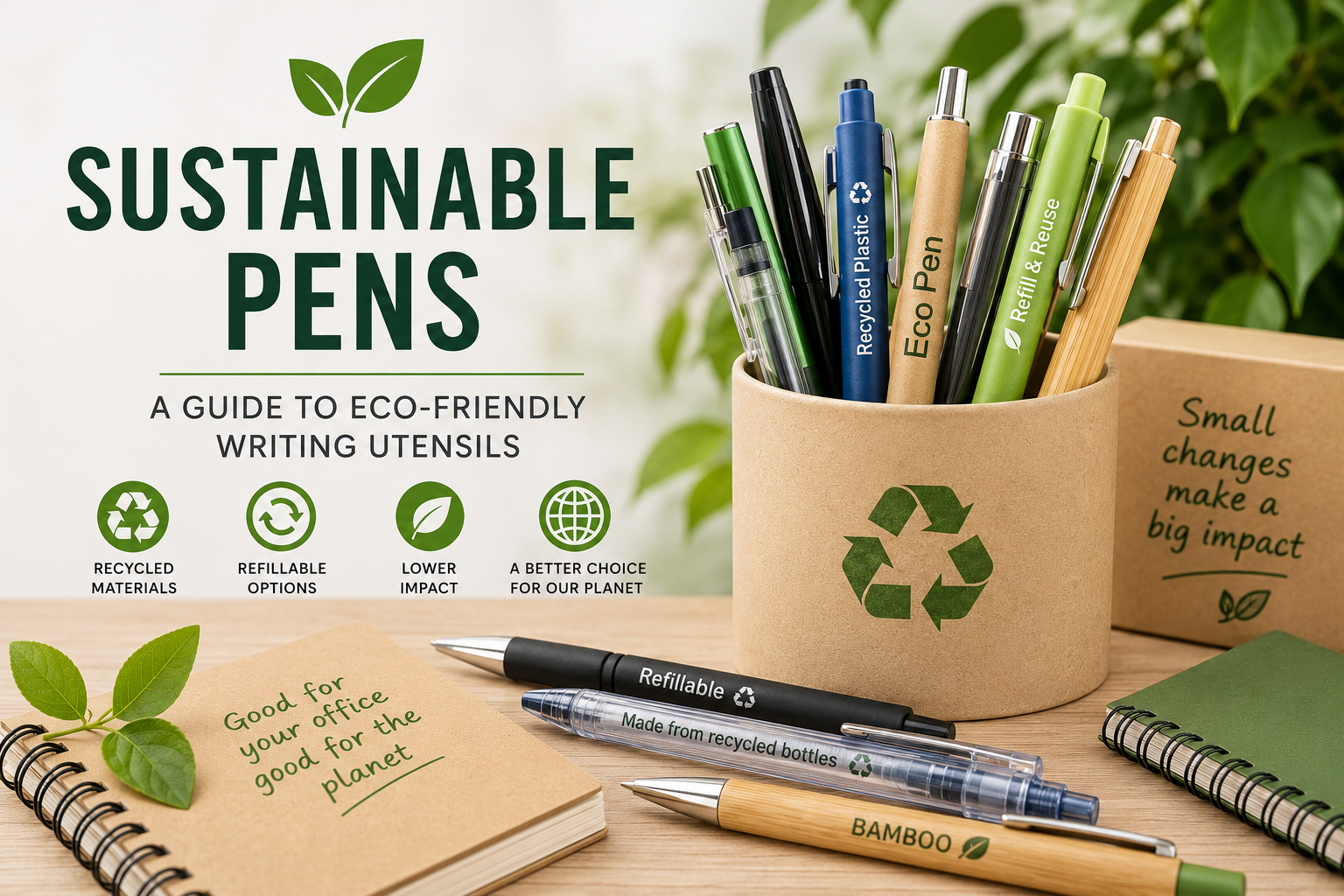
Sustainable Pens: A Practical Guide to Eco-Friendly Writing Utensils
Pens are small, inexpensive and easy to overlook, but across a busy workplace they can become a surprisingly large stream of disposable stationery.
From recycled plastic ballpoints to refillable rollerballs, erasable pens, water-based markers and specialist recycling schemes, this guide explains what to look for when choosing more sustainable writing instruments.
Buying Basics
What makes a pen more sustainable?
A more sustainable pen is not defined by one feature alone. Material choice matters, but so do lifespan, refillability, packaging, performance and what happens at the end of the product's useful life.
For most workplaces, the best choice is usually a pen that performs well, gets used fully and avoids unnecessary single-use material wherever practical.
Main Options
The main types of sustainable pens
Option 1
Recycled plastic pens
Recycled plastic pens are one of the easiest substitutes for conventional disposable pens because they work in exactly the same way while incorporating recovered material into the product.
Depending on the range, recycled content may be used in the barrel, cap or other components.
Good for:
- General office writing
- Reception desks and meeting rooms
- Schools and training rooms
- Shared stationery cupboards
- Businesses introducing greener purchasing policies
Option 2
Refillable pens
Refillable pens can be one of the most practical ways to reduce writing-instrument waste because the main pen body remains in use when the ink runs out.
They are particularly useful for staff who write frequently and tend to keep the same pen rather than using whatever is nearest.
Read our guide to using pen refills to save money and reduce waste .
Option 3
Pens made from recycled bottles
Some writing ranges turn recycled plastic, including recovered PET bottles, into new pen components.
These products can provide a useful example of circular material use because they turn a familiar waste stream into an everyday workplace product.
Pilot Bottle 2 Pen, often referred to as B2P, is a well-known example of this approach. When comparing products, check the current recycled-content specification rather than relying on the range name alone.
Option 4
Recycled and refillable gel pens
Gel and rollerball pens are popular with people who write regularly because they can provide a smoother writing experience than a basic ballpoint.
Look for recycled-content barrels, refillable models or pen-and-refill systems where available.
A comfortable pen that staff actually keep and refill can be more useful than repeatedly supplying low-cost disposable alternatives.
Option 5
Erasable pens and waste reduction
Erasable pens such as FriXion products offer a different type of waste reduction by allowing users to correct handwriting instead of crossing out notes or starting again.
They can work particularly well for planners, diaries, worksheets, notes and draft documents.
Option 6
Fineliners, felt tips and specialist pens
Writing instruments are not limited to ordinary ballpoints. Fineliners, felt tip pens, OHP pens, permanent markers and other specialist products all have different jobs.
The most sustainable choice is still the one that suits the intended surface and application. Buying the wrong pen can create more waste if it gets discarded early or simply does not work properly.
Alternative Materials
Bamboo, wood and plant-based pens
Bamboo, wood and plant-based materials can reduce the amount of conventional plastic used in a pen and may be attractive for events, reception areas and promotional applications.
However, the material alone does not automatically make a pen the better environmental option.
- Is it durable?
- Can the ink be refilled?
- Is the material sourcing explained?
- Does it suit the intended use?
- What happens when it reaches the end of its life?
End Of Life
Pen recycling schemes
Even a well-chosen pen eventually reaches the end of its useful life. Where a specialist collection scheme is available, separating used pens and markers from general waste can provide a more appropriate end-of-life route.
The Edding Pen Recycling Scheme provides a collection route for eligible used Edding writing instruments and markers.
Learn more in our Edding Pen Recycling Scheme guide .
Explore The Range
Browse sustainable pens by type, brand and ink
Different writing tasks call for different pens. Use the links below to narrow the range by pen style, brand or ink type and find an option that suits the way your workplace actually writes.
Browse by pen type
Browse by brand
Browse by ink type
Workplace Buying Guide
Choose the right pen for the job
Different teams use writing instruments in very different ways. Buying one universal pen for every employee is not always the best approach.
| Workplace Use | Useful Options | What to Prioritise |
|---|---|---|
| General Office | Ballpoint or rollerball | Reliability, recycled content and refillability |
| Reception | Durable ballpoint pens | Comfort, longevity and availability of refills |
| Warehouse | Permanent markers and robust pens | Surface compatibility and durability |
| Education | Water-based, erasable and general writing pens | Appropriate ink, usability and refill options |
| Planning & Meetings | Gel pens, fineliners and markers | Visibility, comfort and correct surface use |
Quick Checklist
How to compare sustainable pens
- Check recycled content: Does the product use recovered material?
- Prioritise refillability: Can the ink be replaced without discarding the whole pen?
- Check refill availability: Can the correct refill be easily reordered?
- Match the pen to the task: Correct performance helps avoid premature disposal.
- Review packaging: Can unnecessary individual or plastic packaging be avoided?
- Consider longevity: Will staff keep and use the pen?
- Plan for end of life: Is a suitable recycling scheme available?
Smarter Procurement
Avoid buying more pens than the workplace needs
Sustainable stationery is also about reducing unnecessary consumption. A recycled pen sitting unused in a cupboard still represents materials, manufacturing and purchasing.
- Review how many pens are genuinely used
- Keep shared stationery stock controlled
- Avoid duplicate orders across departments
- Stock refills alongside refillable pens
- Standardise a small number of good products where practical
Product Spotlight
Recycled pens in everyday use
If you want to see how recycled-content pens perform in a normal office setting, our Paper Mate Kilometrico Recycled Pens review looks at one practical everyday option.
The useful question is not whether a product has a green label, but whether it offers good writing performance while making a credible improvement in material use, longevity or refillability.
Bigger Picture
Small stationery changes can support a wider strategy
Pens are only one part of office procurement, but they are a useful example of how repeated everyday purchases can be reviewed without changing the way people work.
Combine recycled or refillable pens with recycled paper, better cleaning supplies, workplace recycling and lower-waste purchasing for a more joined-up approach. Our 5 Easy Eco-Friendly Office Supply Swaps provides a simple starting point.
Keep Reading
Related sustainable stationery guides
Final Thoughts
The best sustainable pen is one that gets used
Sustainable pens do not need to be complicated. Start by reducing unnecessary disposable products, introduce recycled-content or refillable alternatives and make sure the pens you choose actually suit the people using them.
A durable pen that writes well, can be refilled and stays in use is often a better workplace choice than constantly replacing low-cost disposable pens.
Find more sustainable pens for your workplace
Compare recycled, refillable and lower-waste writing instruments by pen type, brand and ink.


Featured Blog Posts
Latest Blog Posts
.jpg)

.jpg "Green Office Free Delivery")


