
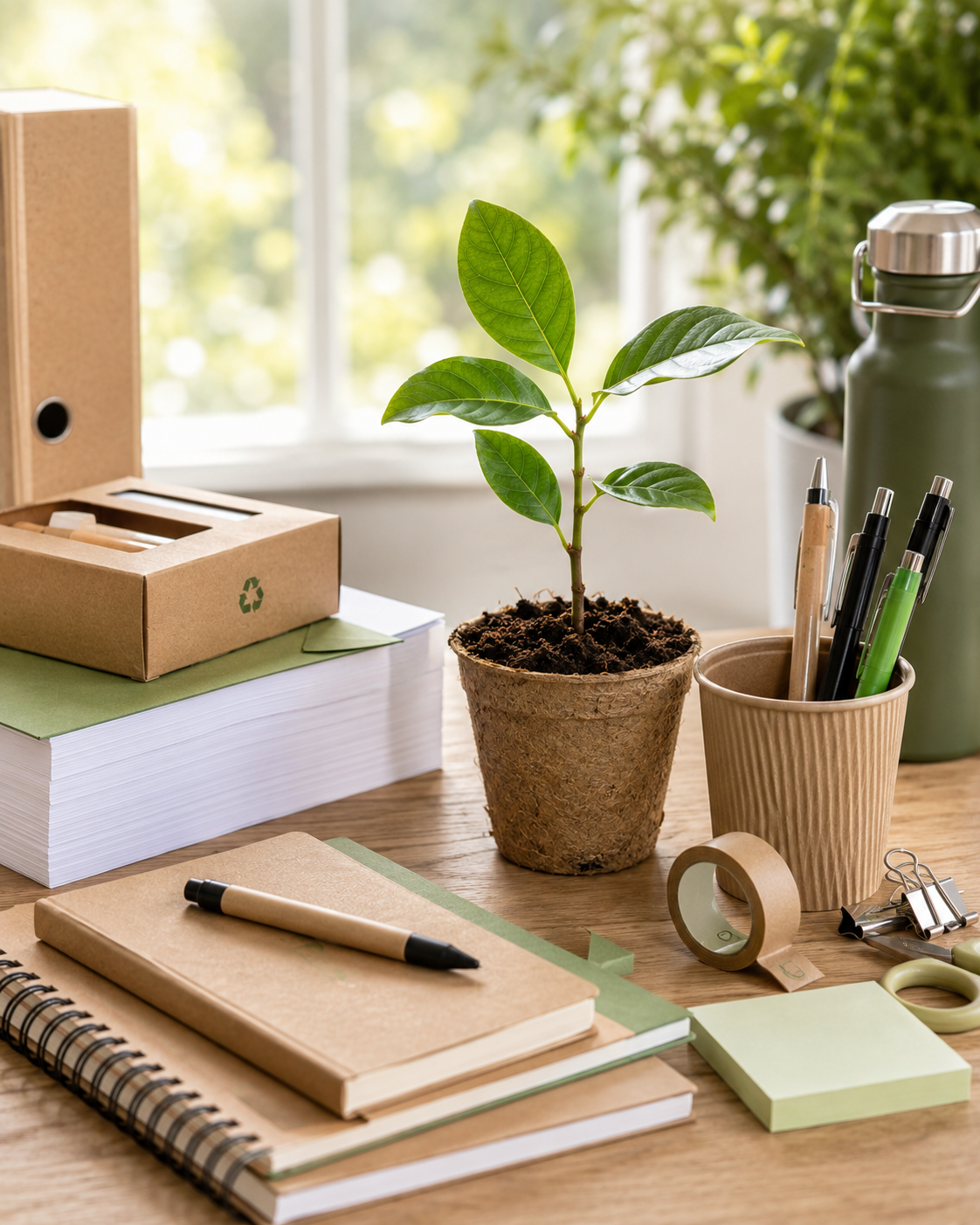
Understand real-world use
Look at why products are being purchased, who uses them and how workplace behaviour affects consumption, lifespan and end-of-life recovery.
Look at the whole lifecycle
Consider durability, refillability, material composition, sourcing, manufacturing information, distribution and realistic disposal routes where reliable data is available.
Make sustainability practical
Focus on changes that employees can realistically adopt and that balance environmental considerations with performance, availability and cost.
Sustainable Procurement
Sustainability starts with understanding how a product is actually used
Replacing an existing product with one carrying a greener specification is sometimes the right answer. But it is not automatically the best answer.
When we review workplace purchasing, we can look at why a product is being bought, where it is used, how frequently it is replaced, whether employees retain control of it and what is realistically likely to happen when it reaches the end of its useful life.
In some cases the better answer may be a product with greater recycled content. In others it may be moving to a refillable product, choosing something more durable, purchasing less frequently, introducing a recycling route or removing the need for the product altogether.
The objective is not to make every purchase look greener on a spreadsheet. It is to help organisations make better-informed decisions when real-world use and the wider product lifecycle are taken into account.
Questions a procurement review can consider
- Why is the product being purchased?
- Who uses it and where?
- Can consumption be reduced?
- Could a refillable or reusable option work?
- How important are durability and expected lifespan?
- Does the organisation retain control of the product at end of life?
- Is there a realistic recycling, return or collection route?
Looking Beyond the Label
A recycled product is not automatically the best answer
Environmental specifications matter, but one percentage or certification rarely tells the whole story. The right recommendation can change depending on how the product is used and how much control the organisation has over its lifecycle.
Kept in the Workplace
Refillability may matter more
If an item stays within the organisation and employees can return or refill it, extending product life may reduce the number of complete products being purchased and discarded.
Leaves the Organisation
Material choice may become more important
If products are routinely given to visitors, customers or delegates, the organisation may lose control over refilling and disposal. A different material or recycled-content option may therefore be more practical.
End of Life
A recycling claim needs a recycling route
A recyclable product only delivers its intended end-of-life benefit if there is a realistic way to recover it. Where suitable schemes exist, we can help customers identify recycling boxes, collections and take-back routes.
Where reliable supplier or manufacturer information is available, we can also consider material composition, responsible sourcing, manufacturing location, product durability, refillability, packaging, distribution, relevant carbon information and likely end-of-life treatment. Not every data point is available for every product, so recommendations are based on the evidence that can reasonably be supported.
How The Green Office Helps
More than an online office supplies store
The value we provide is not simply access to a catalogue of greener products. For corporate customers, we can combine purchasing data, product information and knowledge of how the organisation actually works to identify practical improvements.
Account Support
Dedicated account management
Work with someone who becomes familiar with your organisation, users, locations, product requirements and sustainability priorities.
Product Assessment
Whole-life product thinking
Consider product use, expected lifespan, materials, refillability and realistic end-of-life outcomes rather than relying on a single environmental attribute.
Waste & Recycling
Practical recycling routes
Where appropriate schemes are available, we can help identify recycling boxes, collection services and take-back options, including free schemes for qualifying products.
Procurement
Supplier & product consolidation
Reduce unnecessary supplier fragmentation, duplicated product lines and avoidable delivery frequency where practical.
Control
Purchasing visibility
Better understand repeat purchasing, product consumption and expenditure across users, departments and locations.
Reporting
Sustainability visibility
Use available purchasing and product information to build a clearer picture of the changes being made and the sustainability attributes associated with them.
Account Onboarding
We start with behaviour, not just buying history
Purchasing Control
Simple online ordering with greater control behind it
Everyday ordering should remain straightforward for employees. Behind that, corporate account controls can help organisations manage users, budgets, approvals, cost centres and purchasing processes.
Combined with product standardisation and account management, those controls can help make sustainability improvements easier to introduce and maintain across teams and locations.
Find out more about Corporate Account Benefits →Better purchasing control
- centralised workplace purchasing
- budgets and approval workflows
- cost-centre visibility
- preferred product lists
- reduced supplier fragmentation
- support across multiple users and locations
Our Approach
Reduce first. Then choose better.
Responsible procurement is not always about finding another product to buy.
Sometimes the better answer is reducing unnecessary consumption, extending the life of an existing product, ordering less frequently, consolidating deliveries or standardising a smaller range across the organisation.
Once those opportunities have been considered, alternative products can then be introduced where they offer a practical improvement.
Current Sustainability Indicators
Measuring progress where we can
We believe sustainability information is more useful when it can be tracked and reviewed rather than presented as a broad environmental promise.
Catalogue percentages reflect available product data and categorisation and may change as ranges, suppliers and product information are updated.
Making Informed Choices
The information behind a better product decision
Where reliable product information is available, we aim to consider more than a single environmental claim. Different attributes become more or less important depending on how the product will actually be used.
Tree Planting & Reforestation
Customer orders also help support reforestation
Published Sustainability Targets
What we are working towards
We distinguish between progress already made and targets that are still being worked towards.
Increase the proportion of packaging meeting our sustainability criteria while reducing unnecessary material use where practical.
Work towards carbon-neutral delivery across UK orders as logistics and delivery arrangements continue to develop.
Continue identifying opportunities to reduce avoidable waste across procurement, supply and fulfilment.
Guidance & Reporting
Explore our sustainability resources
Better Purchasing Starts with Better Questions
Let us look at how your organisation actually uses the products it buys
We can review your existing purchasing, understand how frequently used products fit into day-to-day operations and identify practical opportunities to reduce consumption, extend product life, improve end-of-life recovery and choose better alternatives where appropriate.
