0 £0.00
products in your basketto quote Checkout
Ooops no items were found.
Try something else.
Ok
Loading…

Business Recycling Guide

Business Recycling Services UK: Office Waste, First Mile Solutions & Compliance Guide

A practical guide to improving workplace recycling with clear waste separation, suitable recycling bins, specialist recycling services and structured business waste collections.

Whether you are improving an existing recycling system or starting from scratch, the right mix of bins, collections and specialist recycling services can make workplace waste easier to manage.

Why It Matters

Why office recycling matters

Modern workplaces generate a mixture of paper, cardboard, packaging, food containers, printer consumables and general waste. Without a clear recycling system, recyclable materials can easily end up in the wrong waste stream.

A better workplace recycling system can help:

  • Separate recyclable and non-recyclable waste more clearly
  • Reduce contamination between waste streams
  • Improve workplace organisation
  • Support sustainability and ESG objectives
  • Make waste processes easier for employees to follow

Recycling Infrastructure

Start with the right office recycling bins

Recycling works best when the correct bin is easy to identify and located close to where the waste is produced. A good office system might include desk-side recycling, central recycling stations, larger bins for communal areas and higher-capacity containers for busy workplaces.

Browse our full office recycling bins range to compare sizes and styles for different workplace environments.

Desk & Small Office Smaller bins are useful for low-volume areas, individual workspaces and compact offices.
Shared Recycling Points Medium-capacity bins work well in kitchens, print rooms, corridors and shared office areas.
High-Volume Areas Larger-capacity bins are better suited to busy communal areas, warehouses, schools and larger sites.

Browse By Capacity

Choose a recycling bin size that suits your workplace

Capacity matters. Smaller bins may be appropriate for desks and low-volume areas, while larger recycling points can reduce emptying frequency in busy communal spaces.

Browse By Brand

Explore office recycling bins by manufacturer

Different manufacturers offer different formats, capacities and recycling systems. Use the links below to narrow the range by brand.

Structured Waste Services

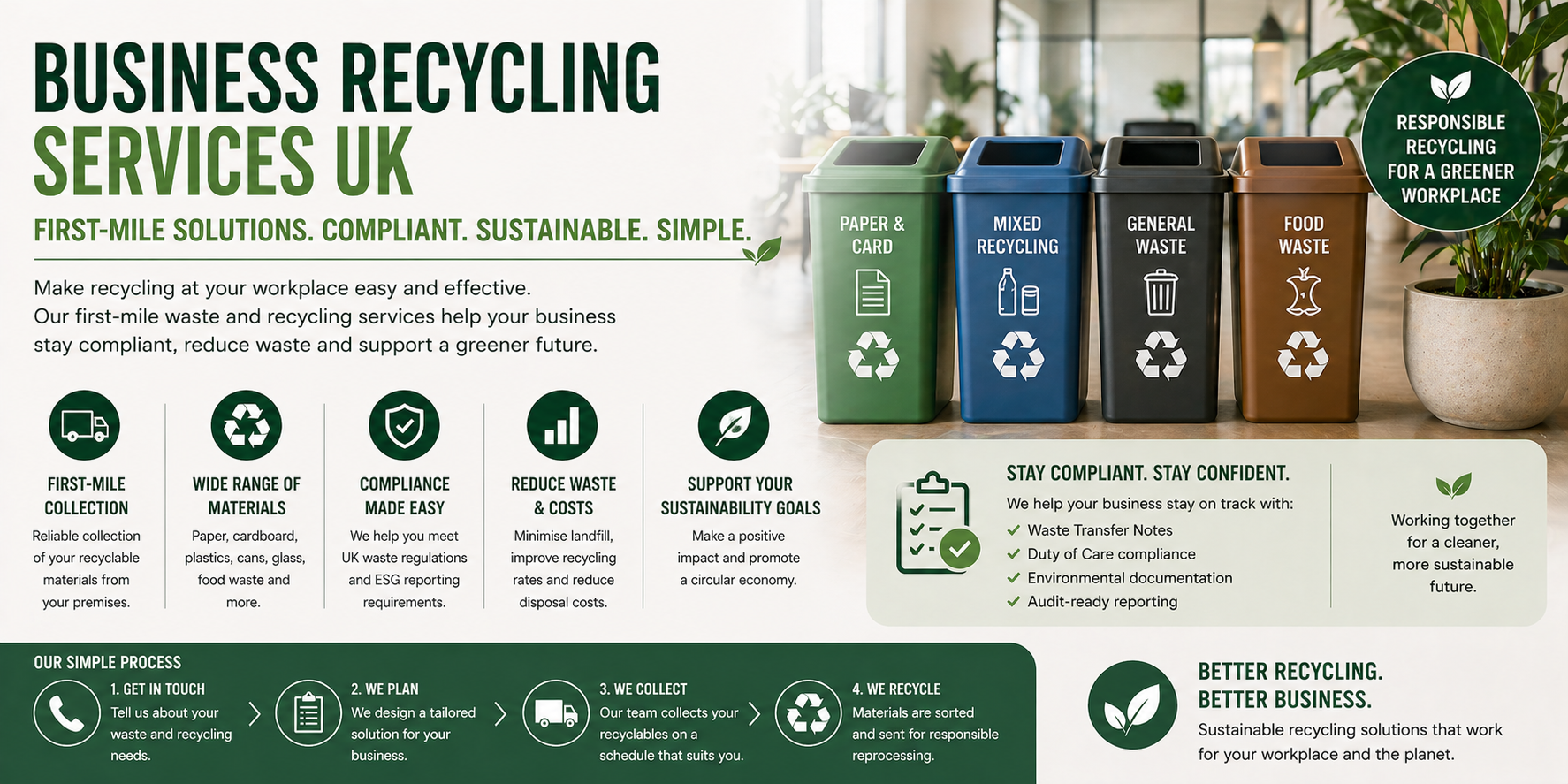
First Mile business recycling services

For businesses generating higher volumes of waste, structured collections can provide a more scalable solution than relying on ad hoc office recycling.

First Mile services can help businesses build a waste system around flexible collections, clearer waste separation, service management and reporting.

Flexible Collections Collections can be structured around the requirements of the workplace.
Service Management Customer portal access can help manage schedules, documentation and services.
Reporting Waste and carbon reporting can provide useful visibility for sustainability programmes.

Build a joined-up workplace waste system

1. Dry Mixed Recycling

Dry mixed recycling can provide a straightforward way to collect common recyclable materials such as paper, light cardboard, cans and suitable containers.

Shop First Mile Dry Mixed Recycling Sacks

2. Cardboard Recycling

Cardboard can quickly become one of the largest workplace waste streams for businesses receiving frequent deliveries. Keeping it separate can reduce clutter and make recycling easier to manage.

Shop First Mile Cardboard Recycling Stickers

3. General Waste

Some residual waste will remain even in well-managed recycling programmes. A separate general waste stream helps prevent non-recyclable material contaminating recycling.

Shop First Mile General Waste Sacks

Specialist Recycling

Toner and pen recycling

Everyday mixed recycling does not cover every type of workplace waste. Printer cartridges and pens are two examples where dedicated collection schemes can help expand recycling beyond paper, card and packaging.

Toner & Inkjet Recycling

Collect used printer cartridges separately rather than placing them into normal office waste.

View Toner Recycling Box

Pen Recycling

A dedicated pen collection point can help stop everyday writing instruments simply disappearing into general waste.

View Pen Recycling Box

Reporting & Compliance

Improve visibility of workplace waste

For many organisations, recycling is no longer only about removing waste. Businesses increasingly need clearer processes, documentation and reporting to understand how waste is being managed.

  • Keep waste streams clearly separated
  • Maintain relevant waste documentation
  • Review collection patterns and volumes
  • Use reporting data where available
  • Make recycling responsibilities clear across the workplace

Practical Approach

Creating a complete office recycling system

The most effective systems usually combine several recycling solutions rather than relying on a single bin.

  1. Place clearly labelled recycling bins where waste is generated
  2. Use mixed recycling collections for everyday recyclable materials
  3. Separate cardboard where volumes justify it
  4. Provide specialist recycling for toner and pens
  5. Keep general waste separate to reduce contamination
  6. Review the system regularly and adjust capacity where necessary

Final Thoughts

Make office recycling easy to follow

A successful office recycling programme should be straightforward for employees to use. Clear bins, sensible locations and appropriate collection services are more effective than an overly complicated system that people struggle to follow.

Start with your biggest waste streams, choose appropriate recycling infrastructure and expand into specialist services as your programme develops.

Build a better workplace recycling system

Explore office recycling bins, waste separation products and specialist business recycling services.

Shop Recycling Bins First Mile Recycling Ask Our Team

SEARCH ×

Search