0 £0.00
products in your basketto quote Checkout
Ooops no items were found.
Try something else.
Ok
Loading…

Office Shredder Buying Guide

Choosing a Fellowes Powershred starts with what you need to destroy

The best shredder for one workplace can be completely wrong for another.

An individual occasionally disposing of confidential paperwork has very different requirements from a busy department processing large volumes of documents throughout the working day.

Security level matters, but so do sheet capacity, bin size, expected usage, noise, jam prevention and where the shredder will physically sit. This guide compares four Fellowes Powershred models covering everything from individual deskside use to heavy departmental shredding.

Already know what you need? Browse our full range of office shredders, from compact personal models to high-capacity departmental machines.

Before Comparing Models

Four things to decide before buying an office shredder

Buying the largest or highest-security machine is not automatically the right answer. A better starting point is to understand how the shredder will actually be used.

1. Security What are you shredding? Everyday confidential paperwork and highly sensitive records may justify different particle sizes and DIN security levels.
2. Users Who will use it? One person's deskside shredder has a very different workload from a centrally located machine used by a whole department.
3. Volume How much will it process? Think about typical shredding sessions rather than the occasional unusually large clear-out.
4. Location Where will it live? Size, bin access and operating noise become increasingly important when a shredder sits in a shared working area.

Understanding Shredder Security

P-4 or P-5: what is the difference?

The DIN security level provides a useful way of comparing the size of the particles produced by a paper shredder. As the P-level increases, the permitted particle size becomes smaller.

P-4 cross-cut machines are widely used for confidential workplace paperwork, while P-5 micro-cut machines produce significantly smaller particles and can be considered where an organisation wants a higher level of document destruction.

The appropriate level should reflect the sensitivity of the information, your organisation's policies and its own security or data-protection requirements.

P-4 Cross-Cut Everyday confidential shredding Featured here on the LX45, 79Ci and heavy-duty 485Ci.
P-5 Micro-Cut Smaller particles The LX211 cuts documents into much smaller micro-cut particles for a higher level of destruction.

Four Powershred Options

Which Fellowes Powershred is right for your office?

These four models cover a useful spread of workplace requirements, from occasional deskside shredding through to shared-office, higher-security and heavy departmental use.
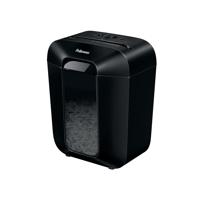
Fellowes Powershred LX45 Cross-Cut Shredder 4401501
Best for Individual / Deskside Use Fellowes Powershred LX45 Cross-Cut Shredder 230V 4401501

A compact P-4 cross-cut model designed for individual or light deskside use. It handles up to 8 sheets per pass and uses a 17-litre bin, making it a practical choice where shredding volumes are relatively modest.

P-4 Cross-Cut 8 Sheets 17L Bin
View Fellowes LX45 →
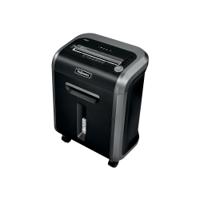
Fellowes Powershred 79Ci Cross-Cut Shredder 4679104
Best for a Shared Small Office Fellowes Powershred 79Ci Cross-Cut Shredder 4679104

A stronger P-4 option for more regular shredding and shared use. The 79Ci combines a 23-litre pull-out bin with Fellowes technologies designed to help reduce jams, improve safety and minimise disruption in a shared workspace.

P-4 Cross-Cut 23L Bin Shared Use
View Fellowes 79Ci →
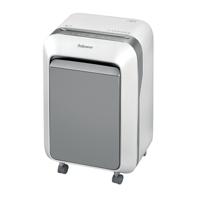
Fellowes Powershred LX211 Micro-Cut Shredder White 5050301
Best for Higher-Security Shredding Fellowes Powershred LX211 Micro-Cut Shredder White 5050301

A P-5 micro-cut machine for workplaces wanting smaller shred particles. It can process up to 15 sheets per pass and has a 23-litre pull-out bin, making it well suited to individual or small-office use where greater document security is preferred.

P-5 Micro-Cut 15 Sheets 23L Bin
View Fellowes LX211 →
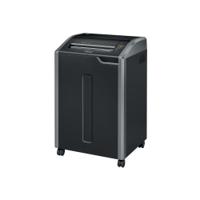
Fellowes Powershred 485Ci Cross-Cut Shredder 4699001
Best for Departments & High Volume Fellowes Powershred 485Ci Cross-Cut Shredder 4699001

A substantial P-4 departmental shredder intended for frequent, high-volume use. Its continuous-duty design, large waste capacity and automatic cutter lubrication make it a very different proposition from a normal deskside machine.

P-4 Cross-Cut Continuous Duty Departmental
View Fellowes 485Ci →

Quick Decision Guide

If your requirement sounds like this...

“It's mainly for me and I only shred modest amounts.” Start with the Fellowes LX45 . It gives you P-4 cross-cut shredding without buying a machine designed for a much heavier workload.
“A few people will use it regularly.” The Fellowes 79Ci offers a useful step up for shared office use with P-4 cross-cut security and features aimed at reducing jams and disruption.
“The documents are particularly sensitive.” Consider the Fellowes LX211 . Its P-5 micro-cut mechanism produces smaller particles than the P-4 machines featured here.
“We need one central machine for a busy department.” The Fellowes 485Ci is the appropriate machine to investigate from this selection. It is designed for a fundamentally heavier workload than the deskside models above.

Bigger Is Not Automatically Better

Buy for your normal workload, not your biggest-ever pile of paper

It is easy to over-specify an office shredder. A large departmental model may look attractive on paper, but there is little value in paying for capacity that a single employee will rarely use.

Equally, repeatedly asking a small personal shredder to handle a department's workload can be frustrating and may shorten the useful life of the machine. Match the shredder to normal use first, then leave some sensible capacity for busier periods.

Beyond Sheet Capacity

Features worth paying attention to

Two shredders with a similar sheet capacity can still feel very different in daily use. Depending on the model, Fellowes includes technologies designed around safety, jam prevention, noise, energy use and machine maintenance.

Jam prevention Particularly useful on shared machines where different users may regularly attempt to feed too much paper at once.
Safety features Some Powershred models incorporate Fellowes SafeSense technology or a safety lock to help reduce accidental operation.
Noise reduction A useful consideration when the shredder sits immediately beside people who are working, calling customers or holding meetings.
Bin design A larger or pull-out bin becomes increasingly valuable as usage rises because the machine requires less frequent emptying.
Energy management Selected models include power-management features designed to reduce unnecessary energy use while the shredder is inactive.
Maintenance High-volume models can incorporate features such as automatic oiling to help keep the cutters operating effectively.

Secure Document Disposal

Paper security still matters

Businesses understandably spend a great deal of time thinking about digital security, but printed information can contain exactly the same customer, employee, commercial or financial data.

A clear document-disposal process helps ensure confidential paperwork is dealt with appropriately rather than being placed intact into ordinary waste or recycling simply because nobody is sure what to do with it.

Put the shredder where the documents are generated Convenient placement can matter just as much as specification. A secure disposal process is easier to follow when employees have straightforward access to the correct equipment.

A Practical Sustainability Point

The right-sized shredder may also be the more sensible long-term purchase

Sustainability is not only about selecting products carrying an environmental claim. Durability, maintenance, useful life and whether the equipment is appropriately specified for its workload all matter.

A machine being constantly overloaded is unlikely to be an ideal purchasing decision, while buying a substantial departmental shredder for very occasional personal use may represent unnecessary equipment and cost. Matching the specification to real-world demand is the better starting point.

Fellowes Powershred FAQs

Common office shredder questions

Is a P-4 shredder suitable for office documents?

P-4 cross-cut shredders are commonly used for confidential workplace paperwork. The appropriate security level should still be determined by the sensitivity of the documents and your organisation's own security and information-handling requirements.

What is the difference between cross-cut and micro-cut shredding?

Both cut the document in more than one direction, but micro-cut shredders produce substantially smaller particles. In the products featured here, the LX211 provides P-5 micro-cut shredding while the LX45, 79Ci and 485Ci use P-4 cross-cut technology.

Do I need a departmental shredder?

Usually only if a number of people will rely on the same machine or you have sustained shredding volumes. For individual or occasional use, a smaller shredder is generally more appropriate.

Can Fellowes Powershred machines shred staples and credit cards?

Many Fellowes models can handle more than plain paper, but capabilities vary by machine. Check the individual product specification before shredding staples, paper clips, credit cards, optical media or other materials.

Which Fellowes Powershred should I choose?

Start with the sensitivity of the documents, then consider the number of users, normal shredding volume, required bin capacity and where the machine will be positioned. Those factors usually narrow the choice considerably.

Choose the Right Shredder

Match the machine to your documents, users and workload

Browse the full shredder range or contact us if you need help deciding which security level and capacity are appropriate for your workplace.

Shop Office Shredders Ask Us for Advice

Office Shredder Buying Guide

Choosing a Fellowes Powershred starts with what you need to destroy

The best shredder for one workplace can be completely wrong for another.

An individual occasionally disposing of confidential paperwork has very different requirements from a busy department processing large volumes of documents throughout the working day.

Security level matters, but so do sheet capacity, bin size, expected usage, noise, jam prevention and where the shredder will physically sit. This guide compares four Fellowes Powershred models covering everything from individual deskside use to heavy departmental shredding.

Already know what you need? Browse our full range of office shredders, from compact personal models to high-capacity departmental machines.

Before Comparing Models

Four things to decide before buying an office shredder

Buying the largest or highest-security machine is not automatically the right answer. A better starting point is to understand how the shredder will actually be used.

1. Security What are you shredding? Everyday confidential paperwork and highly sensitive records may justify different particle sizes and DIN security levels.
2. Users Who will use it? One person's deskside shredder has a very different workload from a centrally located machine used by a whole department.
3. Volume How much will it process? Think about typical shredding sessions rather than the occasional unusually large clear-out.
4. Location Where will it live? Size, bin access and operating noise become increasingly important when a shredder sits in a shared working area.

Understanding Shredder Security

P-4 or P-5: what is the difference?

The DIN security level provides a useful way of comparing the size of the particles produced by a paper shredder. As the P-level increases, the permitted particle size becomes smaller.

P-4 cross-cut machines are widely used for confidential workplace paperwork, while P-5 micro-cut machines produce significantly smaller particles and can be considered where an organisation wants a higher level of document destruction.

The appropriate level should reflect the sensitivity of the information, your organisation's policies and its own security or data-protection requirements.

P-4 Cross-Cut Everyday confidential shredding Featured here on the LX45, 79Ci and heavy-duty 485Ci.
P-5 Micro-Cut Smaller particles The LX211 cuts documents into much smaller micro-cut particles for a higher level of destruction.

Four Powershred Options

Which Fellowes Powershred is right for your office?

These four models cover a useful spread of workplace requirements, from occasional deskside shredding through to shared-office, higher-security and heavy departmental use.
Fellowes Powershred LX45 Cross-Cut Shredder 4401501
Best for Individual / Deskside Use Fellowes Powershred LX45 Cross-Cut Shredder 230V 4401501

A compact P-4 cross-cut model designed for individual or light deskside use. It handles up to 8 sheets per pass and uses a 17-litre bin, making it a practical choice where shredding volumes are relatively modest.

P-4 Cross-Cut 8 Sheets 17L Bin
View Fellowes LX45 →
Fellowes Powershred 79Ci Cross-Cut Shredder 4679104
Best for a Shared Small Office Fellowes Powershred 79Ci Cross-Cut Shredder 4679104

A stronger P-4 option for more regular shredding and shared use. The 79Ci combines a 23-litre pull-out bin with Fellowes technologies designed to help reduce jams, improve safety and minimise disruption in a shared workspace.

P-4 Cross-Cut 23L Bin Shared Use
View Fellowes 79Ci →
Fellowes Powershred LX211 Micro-Cut Shredder White 5050301
Best for Higher-Security Shredding Fellowes Powershred LX211 Micro-Cut Shredder White 5050301

A P-5 micro-cut machine for workplaces wanting smaller shred particles. It can process up to 15 sheets per pass and has a 23-litre pull-out bin, making it well suited to individual or small-office use where greater document security is preferred.

P-5 Micro-Cut 15 Sheets 23L Bin
View Fellowes LX211 →
Fellowes Powershred 485Ci Cross-Cut Shredder 4699001
Best for Departments & High Volume Fellowes Powershred 485Ci Cross-Cut Shredder 4699001

A substantial P-4 departmental shredder intended for frequent, high-volume use. Its continuous-duty design, large waste capacity and automatic cutter lubrication make it a very different proposition from a normal deskside machine.

P-4 Cross-Cut Continuous Duty Departmental
View Fellowes 485Ci →

Quick Decision Guide

If your requirement sounds like this...

“It's mainly for me and I only shred modest amounts.” Start with the Fellowes LX45 . It gives you P-4 cross-cut shredding without buying a machine designed for a much heavier workload.
“A few people will use it regularly.” The Fellowes 79Ci offers a useful step up for shared office use with P-4 cross-cut security and features aimed at reducing jams and disruption.
“The documents are particularly sensitive.” Consider the Fellowes LX211 . Its P-5 micro-cut mechanism produces smaller particles than the P-4 machines featured here.
“We need one central machine for a busy department.” The Fellowes 485Ci is the appropriate machine to investigate from this selection. It is designed for a fundamentally heavier workload than the deskside models above.

Bigger Is Not Automatically Better

Buy for your normal workload, not your biggest-ever pile of paper

It is easy to over-specify an office shredder. A large departmental model may look attractive on paper, but there is little value in paying for capacity that a single employee will rarely use.

Equally, repeatedly asking a small personal shredder to handle a department's workload can be frustrating and may shorten the useful life of the machine. Match the shredder to normal use first, then leave some sensible capacity for busier periods.

Beyond Sheet Capacity

Features worth paying attention to

Two shredders with a similar sheet capacity can still feel very different in daily use. Depending on the model, Fellowes includes technologies designed around safety, jam prevention, noise, energy use and machine maintenance.

Jam prevention Particularly useful on shared machines where different users may regularly attempt to feed too much paper at once.
Safety features Some Powershred models incorporate Fellowes SafeSense technology or a safety lock to help reduce accidental operation.
Noise reduction A useful consideration when the shredder sits immediately beside people who are working, calling customers or holding meetings.
Bin design A larger or pull-out bin becomes increasingly valuable as usage rises because the machine requires less frequent emptying.
Energy management Selected models include power-management features designed to reduce unnecessary energy use while the shredder is inactive.
Maintenance High-volume models can incorporate features such as automatic oiling to help keep the cutters operating effectively.

Secure Document Disposal

Paper security still matters

Businesses understandably spend a great deal of time thinking about digital security, but printed information can contain exactly the same customer, employee, commercial or financial data.

A clear document-disposal process helps ensure confidential paperwork is dealt with appropriately rather than being placed intact into ordinary waste or recycling simply because nobody is sure what to do with it.

Put the shredder where the documents are generated Convenient placement can matter just as much as specification. A secure disposal process is easier to follow when employees have straightforward access to the correct equipment.

A Practical Sustainability Point

The right-sized shredder may also be the more sensible long-term purchase

Sustainability is not only about selecting products carrying an environmental claim. Durability, maintenance, useful life and whether the equipment is appropriately specified for its workload all matter.

A machine being constantly overloaded is unlikely to be an ideal purchasing decision, while buying a substantial departmental shredder for very occasional personal use may represent unnecessary equipment and cost. Matching the specification to real-world demand is the better starting point.

Fellowes Powershred FAQs

Common office shredder questions

Is a P-4 shredder suitable for office documents?

P-4 cross-cut shredders are commonly used for confidential workplace paperwork. The appropriate security level should still be determined by the sensitivity of the documents and your organisation's own security and information-handling requirements.

What is the difference between cross-cut and micro-cut shredding?

Both cut the document in more than one direction, but micro-cut shredders produce substantially smaller particles. In the products featured here, the LX211 provides P-5 micro-cut shredding while the LX45, 79Ci and 485Ci use P-4 cross-cut technology.

Do I need a departmental shredder?

Usually only if a number of people will rely on the same machine or you have sustained shredding volumes. For individual or occasional use, a smaller shredder is generally more appropriate.

Can Fellowes Powershred machines shred staples and credit cards?

Many Fellowes models can handle more than plain paper, but capabilities vary by machine. Check the individual product specification before shredding staples, paper clips, credit cards, optical media or other materials.

Which Fellowes Powershred should I choose?

Start with the sensitivity of the documents, then consider the number of users, normal shredding volume, required bin capacity and where the machine will be positioned. Those factors usually narrow the choice considerably.

Choose the Right Shredder

Match the machine to your documents, users and workload

Browse the full shredder range or contact us if you need help deciding which security level and capacity are appropriate for your workplace.

Shop Office Shredders Ask Us for Advice

SEARCH ×

Search