0 £0.00
products in your basketto quote Checkout
Ooops no items were found.
Try something else.
Ok
Loading…

Greener workplace advice

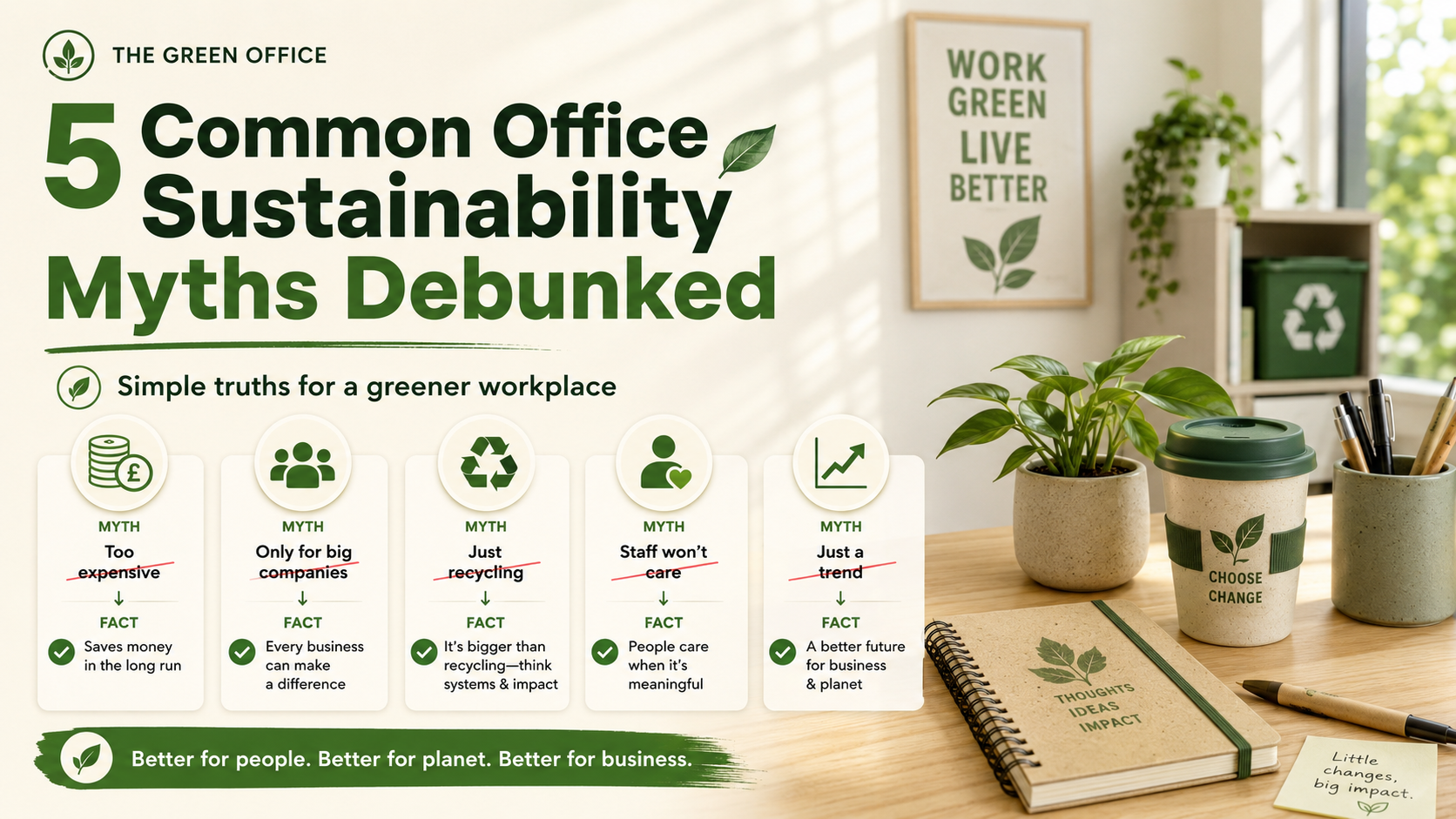
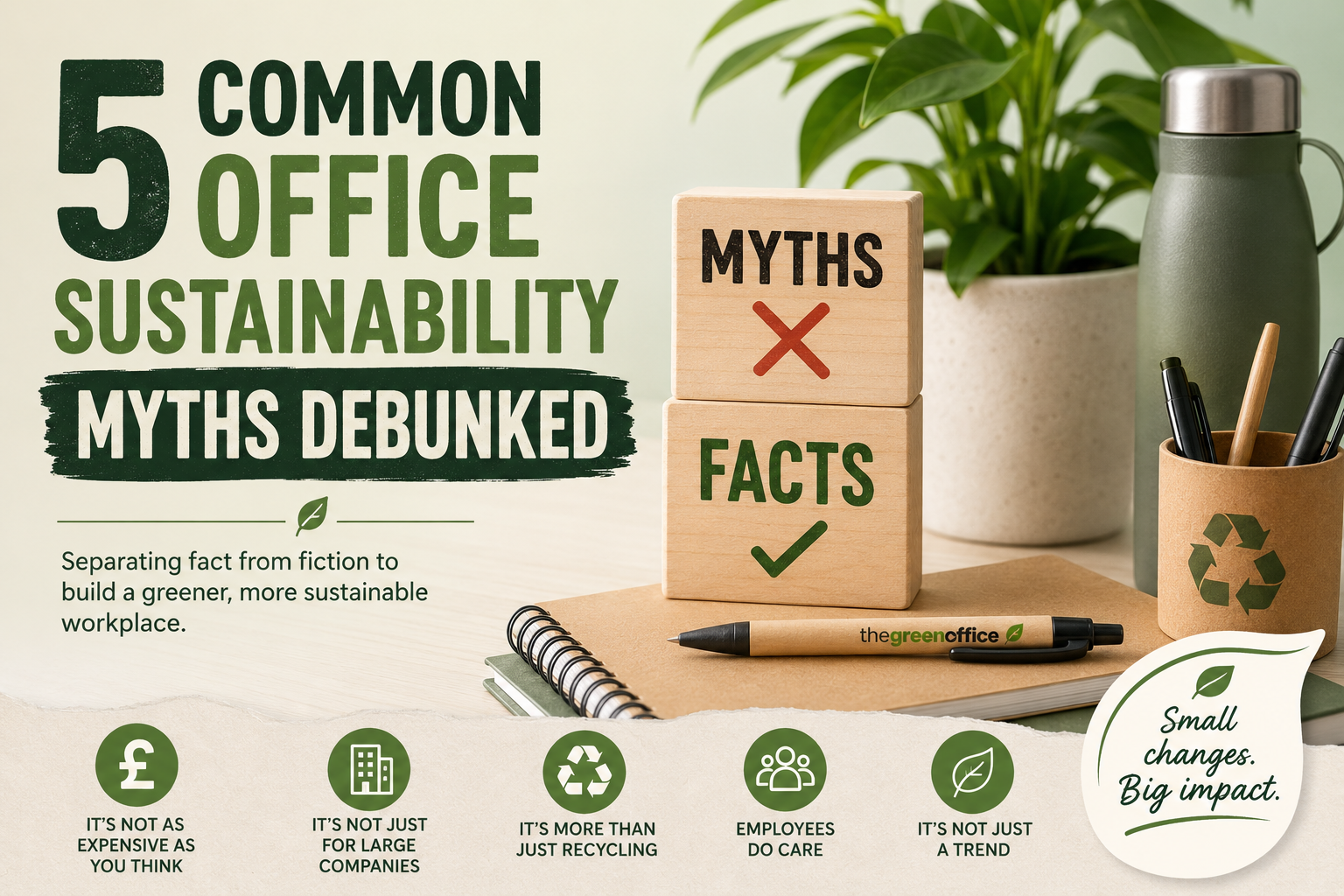
5 Common Office Sustainability Myths Debunked

Office sustainability can feel like a big subject, but it does not have to be complicated. Many businesses want to make greener choices but are held back by common myths: that it will cost too much, take too much time, or only make sense for large organisations.

The truth is that a more sustainable office can often start with simple, practical decisions. From reducing waste and saving energy to choosing recycled stationery and improving recycling systems, small changes can quickly become part of everyday working life.

Myth: It costs too much

Many greener office changes help reduce waste, energy use and unnecessary purchasing.

Myth: It is only recycling

Recycling matters, but sustainability also includes purchasing, printing, energy, travel and facilities.

Myth: Staff will not care

Employees are often more engaged when greener habits are easy, visible and clearly explained.

Myth 1: “Sustainability initiatives are too expensive”

This is one of the most common reasons businesses delay making greener changes. While some improvements may require upfront investment, many office sustainability measures are low-cost, no-cost or even cost-saving over time.

Switching off unused equipment, reducing unnecessary printing, using double-sided print settings, improving recycling, reviewing stock levels and choosing longer-lasting office supplies can all help reduce waste and avoidable spend.

Greener purchasing does not always mean buying the most expensive option. It often means buying more carefully, choosing products that last, reducing single-use items and selecting recycled or refillable alternatives where they make sense.

Practical ways to start

  • Reduce unnecessary printing and use recycled printer paper for essential documents.
  • Choose recycled pens, notebooks, files and envelopes when restocking stationery.
  • Use clearly labelled recycling bins to reduce general waste.
  • Encourage reusable cups and bottles in kitchens, meeting rooms and staff areas.
  • Review frequently ordered products and look for lower-waste alternatives.

Myth 2: “Office sustainability is only for large corporations”

Large organisations may have dedicated sustainability teams, but every workplace can make improvements. Small offices, schools, charities, hospitality businesses, home offices and local companies all use energy, paper, packaging, cleaning products and office supplies.

Smaller teams can often act more quickly because decisions are simpler and changes are easier to communicate. A small business can start by reviewing its stationery cupboard, switching to recycled paper, setting up a better recycling point or choosing eco-conscious cleaning products.

Sustainability does not have to begin with a full environmental strategy. It can begin with one sensible improvement that your team can repeat every day.

Myth 3: “Sustainability is just about recycling”

Recycling is important, but it is only one part of a greener office. A better approach is to think about the whole lifecycle of the products your workplace buys, uses and throws away.

Before recycling, ask whether the item needed to be used at all. Could you reduce printing? Could you choose refillable products? Could you buy recycled stationery? Could you reduce packaging? Could you repair, reuse or repurpose equipment before replacing it?

A truly greener office looks at reduction, reuse, responsible purchasing and recycling together. The best recycling system is helpful, but it works even better when less waste is created in the first place.

Think beyond the recycling bin

To make your workplace more sustainable, look at the everyday categories your team uses most often:

Recycled paper, recycled and refillable pens, recycling bins, office stationery, cleaning supplies, washroom products and packaging can all offer opportunities for greener swaps.

Myth 4: “Employees will not care about sustainability”

Many employees do care about working for an organisation that takes its environmental impact seriously. The key is to make sustainability practical rather than preachy. People are far more likely to get involved when greener choices are easy to understand and simple to follow.

Clear recycling labels, visible reminders near printers, reusable mugs in the kitchen, greener stationery in the cupboard and simple team goals can all help turn good intentions into everyday habits.

It also helps to involve staff in the process. Ask for ideas, invite feedback and let people suggest the changes that would make the biggest difference in their own work areas.

Easy ways to engage the team

  • Create a small green team or appoint a workplace sustainability champion.
  • Run a “print less this week” challenge.
  • Share progress, such as reduced paper orders or improved recycling.
  • Ask employees which single-use items they think could be replaced.
  • Make greener products the default option in stationery cupboards and kitchens.

Myth 5: “Sustainability is just a short-term trend”

Sustainability is not a passing workplace trend. It is becoming a normal part of how organisations think about purchasing, waste, energy, brand reputation and employee expectations.

Customers, staff and suppliers increasingly expect businesses to make more responsible decisions. For many organisations, greener office habits are now part of good business practice, not a temporary campaign.

The workplaces that make steady, practical improvements now are better placed to reduce waste, manage resources, meet changing expectations and build a more responsible supply chain.

How to take action without feeling overwhelmed

The best way to make your office more sustainable is to start small and build from there. Choose one area of the workplace, review what is currently being used, and look for a realistic improvement.

For example, you could begin with paper, pens, recycling, cleaning supplies or kitchen products. Once that change becomes normal, move on to the next category. This approach is easier to manage and more likely to last.

For more ideas, read our guide to Top 10 Easy Ways to Green Your Office This Week or explore our article on greenwashing and how to avoid misleading eco claims.

A greener office is more achievable than you think

Office sustainability is not about doing everything perfectly. It is about making better choices more often. Reducing waste, saving energy, buying recycled products and helping staff build greener habits can all make a real difference over time.

At The Green Office, we help businesses find more sustainable alternatives for everyday workplace essentials, from recycled stationery and paper to recycling bins, washroom supplies and office products that support more considered purchasing.

SEARCH ×

Search